Do Airlines Actually Check Onward Tickets in 2026? (The Truth)
🔎 Featured Snippet Answer:
Yes, airlines absolutely check for onward tickets. In 2026, check-in agents use an automated database called TIMATIC. If the destination country requires proof of onward travel, the airline's computer system will prompt the agent to verify your return flight before printing your boarding pass. If you cannot provide a verifiable flight reservation (PNR), the airline will deny you boarding to avoid massive international fines.
⚡ Quick Answer for One-Way Travelers
The Myth: Many travelers believe onward ticket checks are random or depend on the mood of the check-in agent. This is false.
The Reality: The check is driven by automated airline compliance software (TIMATIC).
The Liability: If an airline flies you to a country and you are denied entry by immigration, the airline is fined up to $10,000 and must fly you back for free.
The Solution: You do not need to buy an expensive, fully refundable ticket. You can present a legitimate dummy ticket (a temporary flight reservation with a live PNR) for roughly $15 to legally satisfy the check-in agent.
It is the classic digital nomad nightmare. You have packed your bags, canceled your apartment lease, and booked a one-way ticket to a tropical destination. You arrive at the airport two hours early, hand your passport to the airline check-in agent, and wait for them to print your boarding pass.
Instead of handing you the pass, the agent looks at their screen, furrows their brow, and asks: "Can I see your proof of onward travel?"
If you do not have a return flight booked, panic sets in. You have 45 minutes before the baggage drop closes. You are about to be denied boarding.
If you search the internet for the query, "do airlines actually check onward tickets," you will find a chaotic mess of contradictory advice. A backpacker on Reddit will swear they have flown to Thailand ten times and never been asked. A travel blogger will tell you they were denied boarding in Colombia just last week and lost a $600 flight.
Who is telling the truth? Are airline checks completely random?
The short answer is no. In 2026, airline check-in procedures are highly automated, strictly enforced, and driven by international aviation law. This comprehensive guide will pull back the curtain on the airline industry, explain exactly how the check-in desk operates, and teach you how to legally bypass this stressful requirement without spending thousands of dollars on flights you will never take.
✈️ Why Do Airlines Care About Your Visa and Travel Plans?
To understand why a simple airline employee cares about your immigration status, you have to understand international liability.
When you fly internationally, the airline is not just a taxi service; they are legally responsible for ensuring you meet the entry requirements of your destination country. This responsibility is enforced by the International Air Transport Association (IATA).
The Cost of Deportation
Every sovereign nation has strict immigration laws. Countries like Indonesia, the Philippines, the United States, and the Schengen member states legally require foreign visitors on tourist visas (or visa exemptions) to possess a ticket out of the country before their permitted stay expires.
If an airline allows you to board a flight to Bali without proof of onward travel, and the Indonesian immigration officer at the arrival airport decides to deny you entry, the airline is heavily punished.
Massive Fines: The destination government will fine the airline thousands of dollars (often ranging from $3,000 to $10,000 per passenger) for failing to check your documents.
Repatriation Costs: The airline is legally obligated to put you on the next available flight back to your country of origin, entirely at the airline's expense.
Airlines operate on incredibly thin profit margins. They will absolutely not risk a $10,000 fine just to let you fly on a $300 one-way ticket. Therefore, they have shifted the burden of immigration enforcement to the departure gate.
💻 The Secret Software: How the Agent Knows to Ask
Many travelers assume that check-in agents ask for onward tickets based on their personal judgment, racial profiling, or just a "gut feeling." While human bias exists, the actual trigger for the question is a piece of enterprise software.
Enter TIMATIC
Almost every major international airline uses a database called TIMATIC (Travel Information Manual Automatic), maintained by IATA.
When you hand your passport to the agent, they swipe the Machine Readable Zone (MRZ). The airline's Advanced Passenger Information System (APIS) pings TIMATIC with three pieces of data:
Your nationality.
Your destination.
Your transit points.
TIMATIC instantly cross-references this data with the destination country's current immigration laws.
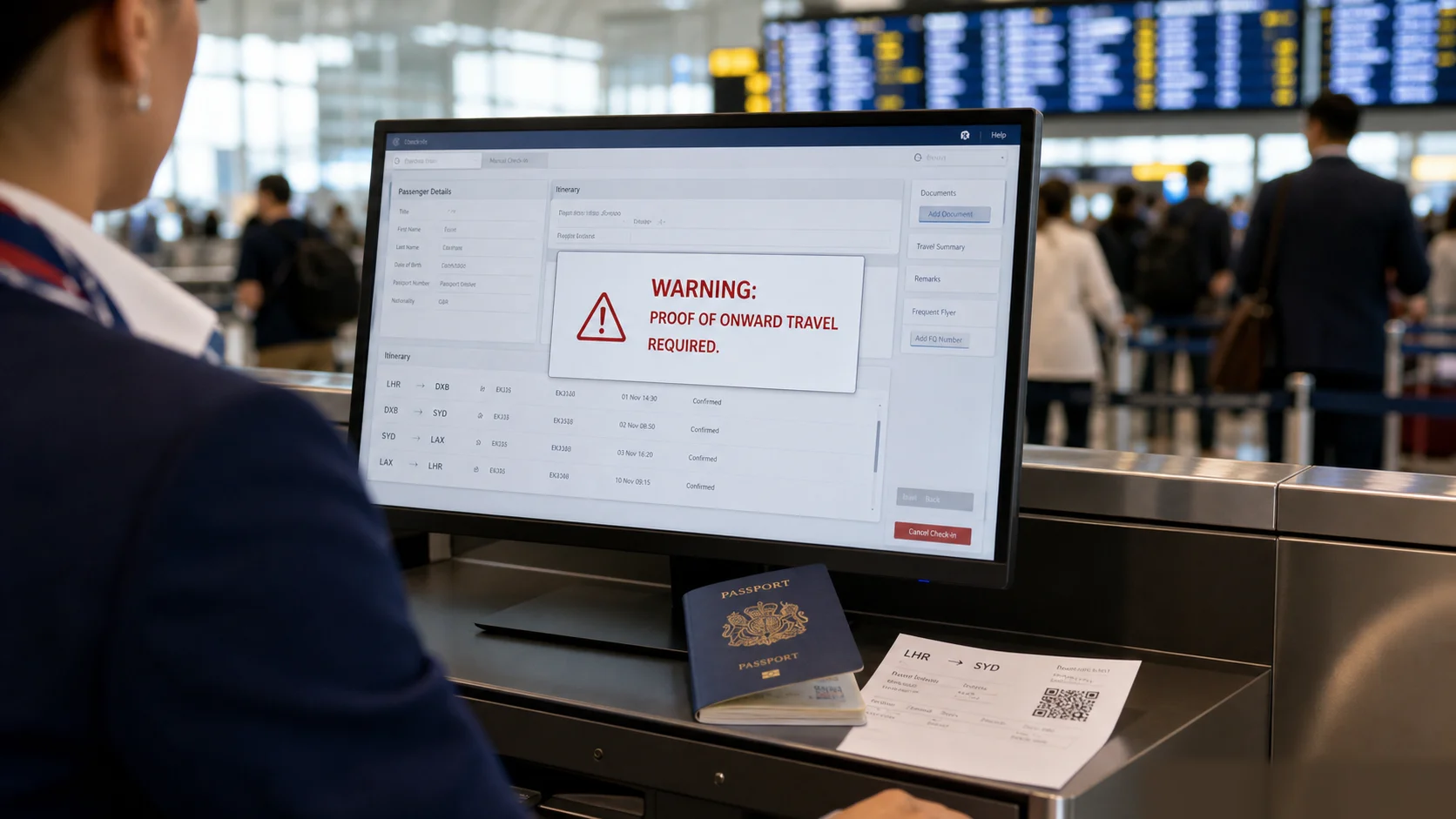
If you are a UK citizen flying to the Philippines, TIMATIC flashes a strict warning on the agent's screen: WARNING: Passenger must hold proof of onward/return travel.
The agent cannot physically print your boarding pass until they click a box confirming they have seen your onward flight. They are required to input your return flight number into the system to clear the warning. This is why the check is not random; it is hard-coded into the airline's operating software.
🌍 Which Countries Have the Strictest Enforcement in 2026?
While TIMATIC provides the rules, enforcement levels can vary slightly based on the airline's internal risk management and regional immigration trends. If you are flying to any of the following destinations on a one-way ticket in 2026, an onward ticket check is practically guaranteed.
1. Southeast Asia (The Strictest Region)
The Philippines: Famous among digital nomads for having the most ruthless onward ticket enforcement in the world. Airlines flying into Manila or Cebu will deny boarding 99% of the time without a verifiable onward ticket.
Indonesia (Bali): Since 2024, Indonesia has cracked down heavily on digital nomads overstaying visas. Whether applying for an e-VOA (Visa on Arrival) or checking in for your flight, airlines (like AirAsia, Scoot, and Emirates) will strictly check your exit flight.
Thailand: While previously relaxed, Thai immigration has pressured airlines to increase checks. Spot checks at departure gates in Europe and Australia for flights bound for Bangkok are now routine.
2. The Americas
United States: If you are flying to the US on an ESTA or a B1/B2 tourist visa, flying on a one-way ticket is a massive red flag. Airlines will aggressively check for a return flight, as US Customs and Border Protection (CBP) heavily penalizes carriers for transporting potential illegal immigrants.
Colombia & Costa Rica: These two digital nomad hotspots are notorious for strict airline enforcement. Carriers like Avianca and Copa Airlines will consistently demand proof of an exit flight before issuing a boarding pass to Bogota or San Jose.
3. The Schengen Area (Europe)
European Union: If you are a non-EU citizen flying into the Schengen Area visa-free (e.g., US, Canadian, or Australian citizens), airlines are prompted by TIMATIC to ensure you have a flight out of the Schengen zone within the 90-day permitted window.
⚠️ What Happens If You Are Denied Boarding?
If you arrive at the airport without proof of onward travel and the agent asks for it, the situation escalates very quickly.
The Ultimatum: The agent will tell you that you cannot check your bags or receive a boarding pass until you produce a confirmed flight itinerary.
The Panic Buy: You will be forced to step out of the line. With your flight boarding in 45 minutes, you will frantically connect to the slow airport Wi-Fi. In a sheer panic, most travelers navigate to an airline website and buy the first fully confirmed, full-fare ticket they can find out of their destination country. This often costs $800 to $1,500.
The Refund Trap: You might tell yourself, "I'll just cancel it for a refund when I land." However, in your panic, you might accidentally buy a "Basic Economy" ticket that is strictly non-refundable. You have just lost $1,000.
Missing the Flight: If your credit card declines the sudden $1,000 charge due to a fraud alert, you will not be able to buy the ticket in time. The check-in counter will close, and you will miss your original flight entirely.
🚫 The "Fake PDF Ticket" Trap
To avoid buying a real ticket, many budget travelers search the internet for a "free onward ticket generator." They download a PDF that looks like a boarding pass or itinerary, edit the dates, and show it to the check-in agent.
This is incredibly dangerous in 2026.
As we established, check-in agents are not just glancing at a piece of paper. The airline software requires them to input your return flight details.
Furthermore, modern check-in agents are trained to verify the Passenger Name Record (PNR).
If you hand them a fake PDF, the agent may type the 6-character PNR code into their Global Distribution System (GDS) terminal. Because the PDF generator simply invented a random code, the airline system will return a "Booking Not Found" error.
At this point, you have presented a forged document to an aviation official. They will absolutely deny you boarding, and they may flag your passport in the airline's security system.
✅ How to Legally Bypass the Rule (Without Paying Full Price)
You do not want to spend $1,000 on a ticket you won't use. You cannot use a free, fake PDF. What is the correct, legal solution?
The travel industry standard for this exact situation is a Verifiable Dummy Ticket (Flight Reservation).
What is a Verifiable Dummy Ticket?
A dummy ticket is a legitimate, temporary flight reservation made through a registered B2B travel agency.
The travel agency uses their enterprise access to a Global Distribution System (like Amadeus or Sabre) to reserve a real seat on a commercial flight.
The Cost: You pay the agency a small service fee (usually around $10 to $20).
The Proof: The airline generates a real, live PNR code for your reservation.
The Verification: When the check-in agent types this PNR into their terminal, the booking shows up as a live, valid reservation in your name. They clear the TIMATIC warning and print your boarding pass.
The Expiration: Because the full airfare was never paid, the airline's automated system simply cancels the hold after a set period (usually 48 hours to 14 days). You do not pay any cancellation fees.
📊 Comparison: Dummy Ticket vs. 24-Hour Refund Hack
Another common piece of advice is the "24-hour airline hack." Let's compare this to a dummy ticket to see which is actually better for your stress levels and your wallet.
Why the 24-Hour Hack Fails: The US Department of Transportation mandates a 24-hour free cancellation window for flights touching US soil. However, if you use this hack, you must buy the ticket at the airport, fly to your destination, clear immigration, find internet access, and cancel the ticket before the 24-hour clock runs out. If your flight is delayed by 10 hours, you might miss the cancellation window entirely. A $15 dummy ticket removes this massive anxiety.
📝 Step-by-Step: How to Use a Dummy Ticket at the Airport
To ensure a flawless check-in experience, follow this exact procedure:
Step 1: Book Your Dummy Ticket 24 Hours Before Departure
Because dummy tickets are temporary holds, you want the PNR to be as fresh as possible when you step up to the check-in counter. Go to a trusted provider like buydummytickets.com approximately 12 to 24 hours before your one-way flight departs.
Step 2: Choose a Logical Exit Route
If you are flying one-way into Bangkok, book your dummy ticket out of Bangkok to a nearby, cheap destination like Kuala Lumpur, Ho Chi Minh City, or back to your home country. Ensure the date of the onward flight is before your Thai visa exemption expires (e.g., within 30 or 60 days).
Step 3: Verify the PNR Yourself
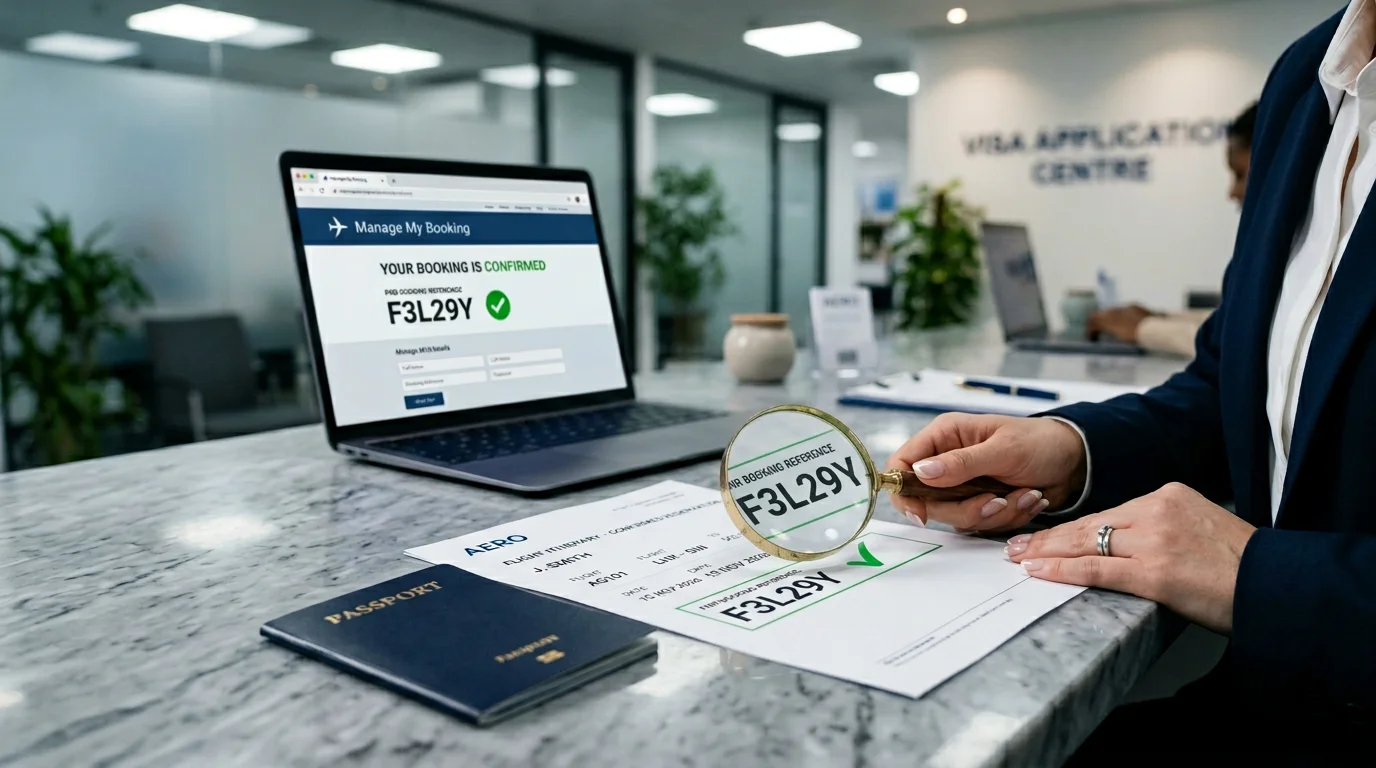
Before you leave for the airport, take the PNR from the PDF you received and check it on the official airline's website (under "Manage Booking"). Seeing the reservation live on your own screen will give you total confidence.
Step 4: Print the Document
Airport check-in agents prefer physical documents. Print your dummy ticket on a clean sheet of A4 paper.
Step 5: Present it Confidently
When the agent asks, "Do you have a return flight?" simply say, "Yes, here is my onward itinerary," and hand them the paper. Do not nervously over-explain that it is a dummy ticket or a temporary hold. To the agent and their computer system, it is a perfectly valid, IATA-compliant flight reservation.
💡 Expert Tips for Digital Nomads and One-Way Travelers
If you travel full-time, managing onward ticket requirements is just part of the lifestyle. Here are professional tips to make it seamless:
Never Argue with the Check-In Agent: The agent does not make the rules; the TIMATIC software does. Arguing that "I flew here last year and no one asked" will only make them scrutinize you harder. Have your documents ready.
Check the Visa Requirements of the Third Country: If you are using a dummy ticket to show onward travel from Country A to Country B, ensure you have the right to enter Country B. If your dummy ticket shows you flying to Australia, but you do not hold an Australian visa, the airline will reject the onward ticket.
Keep Your Accommodation Consistent: While airlines mostly care about the flight out, immigration officers upon arrival might ask where you are staying. If you used a dummy ticket showing you leaving in 14 days, ensure you can show a hotel booking (or a dummy hotel booking) that covers those initial 14 days.
📌 Important Considerations: Immigration vs. Airlines
It is crucial to distinguish between the departure airport and the arrival airport.
The airline check-in agent is acting as a strict filter to protect their company from fines. They will almost always verify your PNR.
The immigration officer at your destination is evaluating you as a person. While they technically have the right to ask to see your onward ticket again, in practice, if the airline let you on the plane, the immigration officer assumes your documents are in order. They are much more likely to ask about your purpose of visit, your profession, and where you are staying.
However, if the immigration officer does ask to see your return flight, your verifiable dummy ticket will perfectly satisfy them, as it is a legally held reservation demonstrating your intent to leave.
🌍 Conclusion: Don't Leave Your Travel to Chance
Do airlines actually check onward tickets? Yes. Driven by the automated TIMATIC system and the threat of massive IATA fines, airline check-in agents are the strictest enforcers of global immigration policies.
Hoping that you get a lazy agent who forgets to ask is a terrible travel strategy. Relying on fake PDF generators is a recipe for deportation.
You deserve to enjoy the freedom of one-way travel without the crushing anxiety of being denied boarding at the gate. By understanding the technology the airlines use, you can legally and safely bypass the requirement.
Spend a few dollars on a verifiable, B2B-generated dummy ticket. It provides the live PNR the airline needs to clear their software, keeps your travel budget intact, and allows you to board your flight with absolute peace of mind.
Ready to secure your flight reservation? Get your verifiable proof of onward travel today and never fear the check-in desk again.
Frequently Asked Questions (FAQ)
1. Do airlines actually check onward tickets in 2026?
Yes. Airlines use automated software called TIMATIC. If your destination country requires proof of onward travel, the system will prompt the check-in agent to verify your return flight before they can physically print your boarding pass.
2. Why do airlines care if I have a return flight?
Airlines are financially liable under international aviation laws (IATA). If they fly you to a country and you are denied entry by immigration because you lack an onward ticket, the destination government fines the airline heavily and forces them to fly you back at their own expense.
3. What happens if I don't have an onward ticket at the airport?
If the airline requires it and you do not have one, you will be denied boarding. You will be forced to either buy an expensive, full-fare ticket on the spot or miss your flight entirely.
4. Can I just show a fake onward ticket on my phone?
No, this is highly risky. Modern check-in agents frequently verify the Passenger Name Record (PNR) code by typing it into their terminal. A fake ticket from a PDF generator will return a "Booking Not Found" error, resulting in denied boarding for document fraud.
5. How does a dummy ticket solve the onward travel problem?
A legitimate dummy ticket is a temporary flight reservation made by a B2B travel agency. It generates a real, live PNR code that is verifiable in the airline's system. When the agent checks it, the system confirms the booking exists, and they will issue your boarding pass.
6. Which countries are the strictest about checking onward tickets?
In 2026, countries in Southeast Asia (particularly the Philippines, Indonesia/Bali, and Thailand) and the Americas (the USA, Colombia, Costa Rica) have extremely strict airline enforcement regarding proof of onward travel.
7. Should I just buy a refundable ticket and cancel it?
You can, but it is financially stressful. You have to pay the full airfare upfront (often $800+), tying up your credit card limit. You also have to remember to manually cancel it within a strict timeframe. A $15 dummy ticket removes this risk entirely.
8. When should I buy my dummy ticket for the airport?
Because dummy tickets are temporary reservations that eventually expire, you should purchase it exactly 12 to 24 hours before your one-way flight departs. This ensures the PNR is active and verifiable when you reach the check-in counter.
9. Will the immigration officer at my destination check the ticket again?
Immigration officers have the authority to ask, though they frequently rely on the airline's initial check. If they do ask, your verifiable dummy ticket perfectly satisfies their requirement to see a planned itinerary out of their country.
10. Do I need an onward ticket if I have a valid long-term visa?
Usually, no. If you hold a valid residency permit, a long-term student visa, or an employment visa for your destination country, TIMATIC will recognize your legal right to stay, and the airline will generally not require proof of an onward flight.

Leave a Comment
Your email address will not be published. Required fields are marked *