
Dummy Ticket vs Refundable Ticket for Visa: Which One Should You Actually Book in 2026?
A dummy ticket is a temporary flight reservation with a live PNR that costs $3–$15 and is built specifically for visa filing, while a refundable ticket is a fully paid airline ticket costing ?20,000–?80,000+ that you can cancel later for a fee. For almost every tourist, business, or Schengen visa application, the dummy ticket is the safer and cheaper choice — but there are a handful of situations where a refundable ticket is actually the smarter move. Here's exactly how to tell which one you need.
If you've spent the last hour with ten browser tabs open comparing prices, refund policies, and horror stories from visa forums, you're not alone. This is one of the most common points of confusion for first-time visa applicants, and getting it wrong can either cost you thousands of rupees you'll never see again, or — in rare cases — get your application flagged for looking inconsistent.
What's Actually the Difference?
Dummy Ticket (Flight Reservation / Itinerary)
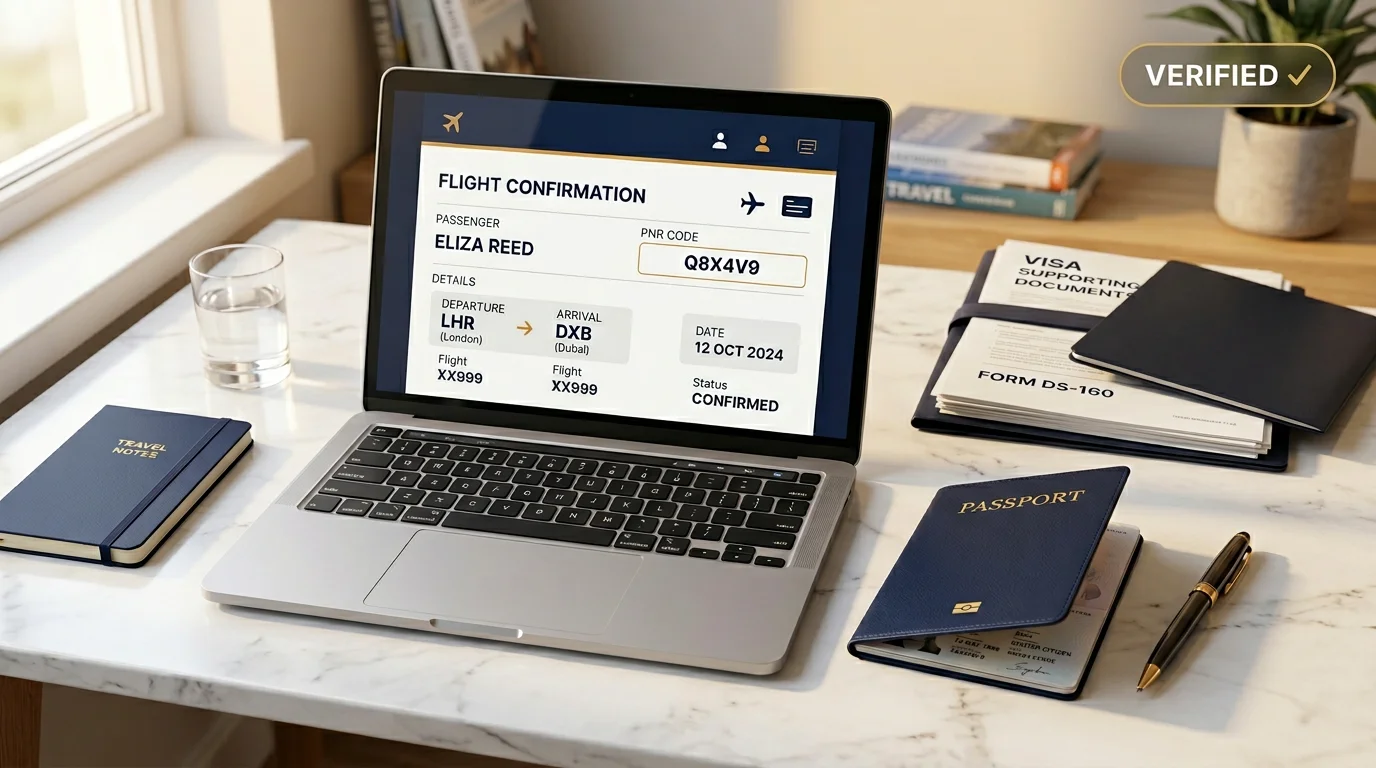
A dummy ticket, sometimes called a flight reservation or flight itinerary, is a real booking made through an airline's GDS (Global Distribution System) like Amadeus or Galileo. It carries your name, route, dates, and a genuine PNR that shows up when you check "Manage Booking" on the airline's own website. Nobody has paid the airline for the seat — it's a hold, not a purchase — which is exactly why it's inexpensive and exactly why embassies accept it.
Refundable Ticket (Fully Paid, Cancellable)
A refundable ticket is a real, fully paid e-ticket. You hand over the entire airfare upfront, and in exchange you get the right to cancel later and claim some or all of that money back, depending on the airline's fare rules. It looks identical to a normal boarding ticket because, technically, it is one.
In short: a dummy ticket proves intent to travel without locking up your money. A refundable ticket proves the same intent, but with your money actually locked up until you cancel it.
Side-by-Side Comparison
| Factor | Dummy Ticket | Refundable Ticket |
|---|---|---|
| Typical cost (India) | ?250 – ?1,200 per person | ?20,000 – ?80,000+ per person |
| Money at risk | Small, fixed service fee only | Full airfare, until refund clears |
| Refund timeline | Not applicable — nothing to refund | 2–6 weeks, sometimes longer |
| Delivery time | 10–60 minutes | Instant, but payment gateway limits apply |
| PNR verifiable on airline site | Yes, if bought from a genuine GDS provider | Yes, always |
| Cancellation fee | None (it simply expires) | Often 10–30% of fare, airline-dependent |
| Accepted by Schengen/UK/Canada embassies | Yes — this is what they explicitly ask for | Yes, but embassies discourage it |
| Best for | Visa filing, proof of onward travel, passport renewal | Confirmed imminent travel, rare embassy demands |
Why Embassies Actually Prefer a Reservation Over a Paid Ticket
This surprises most first-time applicants: most Schengen, UK, and Canadian visa guidelines explicitly warn applicants against buying a fully paid ticket before the visa is approved. The logic is simple — if your visa gets rejected, the embassy doesn't want to be responsible for you losing thousands of rupees on a ticket you can no longer use. A verifiable flight reservation with a real PNR satisfies the "proof of onward travel" requirement without that financial exposure on either side.
This is also why review sites for dummy ticket providers are full of stories about refundable tickets creating more problems, not fewer — travelers who paid full fare and then had their visa application questioned anyway because the itinerary didn't match a stated travel purpose, or who waited weeks for a refund after a visa was refused.
The Hidden Risks of Booking a Refundable Ticket for Visa Purposes
- Your cash is stuck for weeks. Even "instant" refund policies usually mean 10–15 working days before the money actually lands back in your account.
- Cancellation fees eat into your refund. Many refundable fares aren't 100% refundable — airlines routinely deduct a cancellation or admin fee.
- Date changes are expensive. If your visa appointment gets rescheduled (which happens constantly with VFS Global slots), you may need to pay a change fee on a real ticket. A dummy ticket, by contrast, can simply be reissued for the new dates.
- It doesn't reduce scrutiny. A confirmed paid ticket can still raise questions if the itinerary conflicts with your stated travel purpose or your financial documents. Paying full fare is not a shortcut past visa officer judgment.
When a Dummy Ticket Is the Right Call
- Schengen, UK, Canada, and most tourist visa applications — where guidelines specifically ask for a reservation, not a purchased ticket.
- Passport renewal or office leave approval — where you just need a travel itinerary on file, not an actual flight.
- Proof of onward travel at immigration — for backpackers or digital nomads who need to show an exit plan without committing to real dates.
- Any situation where your travel dates might still shift — since a reservation costs almost nothing to reissue.
When a Refundable or Paid Ticket Might Actually Make Sense
- Your visa is already approved and you need to lock in travel within the next few days.
- A specific consulate has, in writing, asked for a confirmed booking rather than a reservation (this is uncommon but does happen with certain Gulf work-visa or long-stay categories).
- You're combining the visa trip with non-refundable connected bookings (tours, cruises) where date certainty matters more than cost.
How to Verify Either Ticket Before You Submit It
Whichever option you choose, don't submit it blind. Here's the two-minute check:
- Open the airline's official website (not the reseller's).
- Go to "Manage Booking" or "Check My Trip."
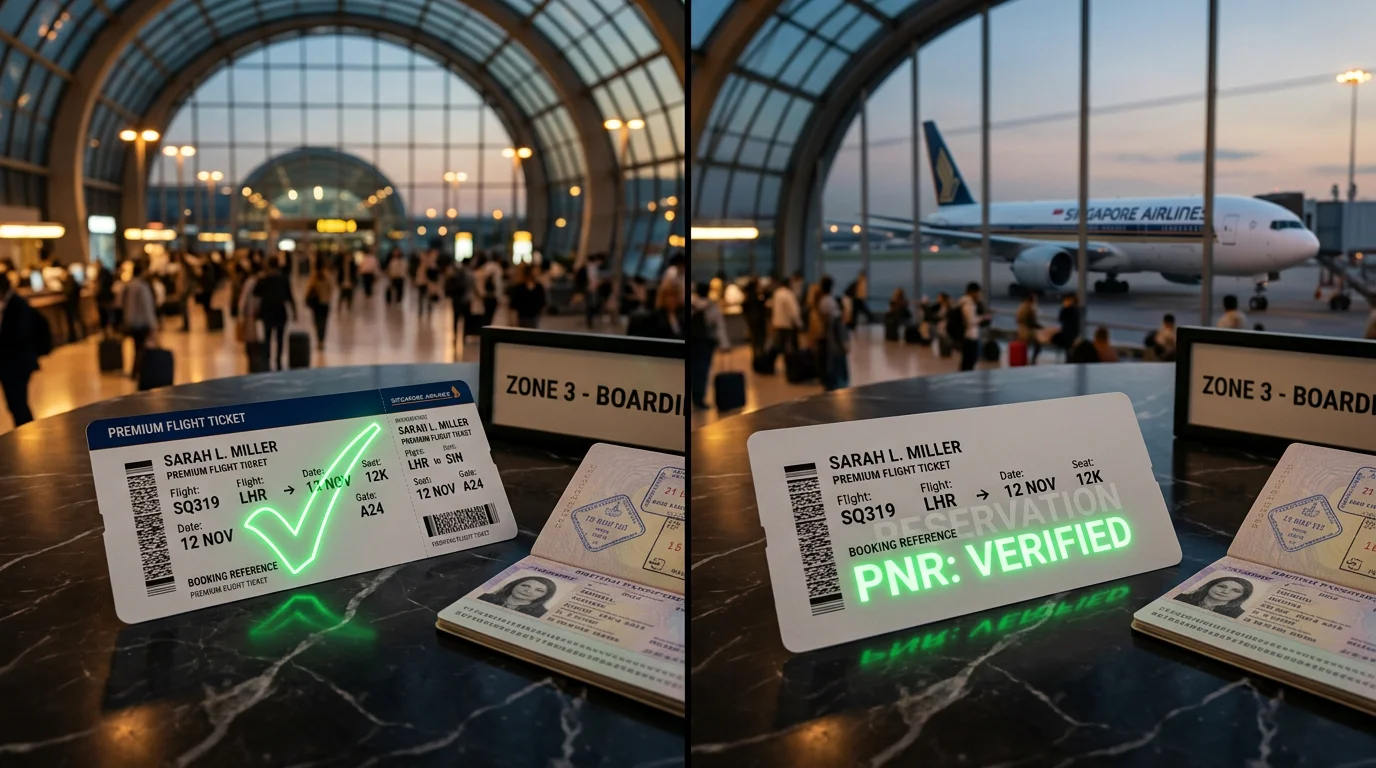
- Enter the last name and the 6-character PNR/booking reference from your document.
- Confirm the route, date, and passenger name match exactly what's on your visa file.
If the booking doesn't appear on the airline's own system, it's not verifiable — regardless of how official the PDF looks.
Real Cost Comparison for a Family of Three (India, 2026)
| Item | Dummy Ticket Route | Refundable Ticket Route |
|---|---|---|
| Flight documentation (3 pax) | ~?1,425 (3 × ?475) | ~?90,000+ upfront |
| Money locked up | ?0 | Full fare until refunded |
| Risk if visa is refused | Ticket simply expires | Wait weeks for a partial refund |
| Risk if dates shift | Reissue in minutes | Airline change fee applies |
Common Mistakes to Avoid
- Presenting a dummy ticket as a boarding pass. It's a reservation, not a travel document — don't use it to actually check in for a flight.
- Buying from a provider that can't show a live PNR. A Photoshopped itinerary with no real airline record is the single biggest cause of rejected flight proof.
- Assuming a refundable ticket "looks more serious." Visa officers evaluate your overall file — funds, purpose, ties to home country — not how much you spent on a flight.
- Forgetting the validity window. Most dummy tickets are valid for 2–3 weeks; time your booking close to your actual visa appointment or travel date.
Frequently Asked Questions
Is a dummy ticket the same as a refundable ticket? No. A dummy ticket is an unpaid reservation with a real PNR, used only for documentation. A refundable ticket is a fully paid airline ticket that can later be cancelled for a partial or full refund.
Can I cancel a dummy ticket after my visa is approved? There's nothing to cancel — a dummy ticket simply expires automatically after its validity period. You won't be charged a cancellation fee.
Will the embassy know I used a dummy ticket instead of a refundable one? Embassies generally cannot tell the difference from the PDF alone, and most explicitly prefer a reservation over a paid ticket. What matters is that the PNR is genuine and verifiable on the airline's website.
What happens if my dummy ticket expires before my visa appointment? Most providers allow you to reissue the reservation with updated dates, usually within minutes, often at little or no extra cost.
Is it safer to buy a refundable ticket just to be extra cautious? Not necessarily. A refundable ticket ties up significantly more money for weeks and doesn't reduce visa scrutiny — it only makes sense if you already have visa approval or a specific written request for a confirmed booking.
Conclusion
For the overwhelming majority of visa applicants, a verifiable dummy ticket does the job embassies actually ask for — a real PNR, a real itinerary, and zero risk to your travel budget. Save the refundable ticket for the moment your visa is actually in hand and you need to lock in real travel dates. Get the documentation right the first time, and you can focus on the part of your application that actually needs your attention: your financials, your cover letter, and your interview prep.
Suggested internal links to insert while publishing:
- "dummy ticket" ? link to homepage booking section
- "proof of onward travel" ? /blog/proof-of-onward-travel-2026-why-digital-nomads-tourists-need-a-verifiable-dummy-ticket/
- "How to verify PNR" section ? /blog/do-embassies-actually-verify-dummy-tickets-the-truth-about-pnr-checks-in-2026/
- "validity window" mention ? /blog/are-dummy-tickets-valid-for-14-days-the-complete-2026-guide-to-dummy-ticket-validity/
- "cost" table ? /blog/how-much-does-a-dummy-ticket-cost-full-2026-pricing-breakdown/
- "passport renewal" bullet ? /blog/how-to-use-a-dummy-ticket-for-passport-renewal-the-complete-2026-guide/
- "Schengen" mentions ? /blog/the-complete-guide-to-flight-reservation-for-visa-2026-dummy-tickets-onward-travel/
- CTA at the end ? homepage booking form (#booking-section)
Suggested external authority references (verify and link at publishing time):
- Official Schengen visa/borders information portal (EU Home Affairs)
- A relevant national visa/immigration authority page (e.g., UK gov visa guidance, IRCC for Canada) matching whichever country you emphasize most
- IATA's general consumer information on fare rules, for the refundable-fare cancellation-fee claim


Leave a Comment
Your email address will not be published. Required fields are marked *